Originally published on LinkedIn, June 4, 2026
Last summer, a mother of three went viral after posting a video of her 12-hour shift at a fast food restaurant. She ran the entire operation herself that day, drive-thru, kitchen, cleaning, because no one else showed up for work. The video garnered millions of views, but in the days that followed, she lost her job because of attendance issues. In interviews, the employee shared that her absences were due to childcare falling through over and over. As her story spread, a GoFundMe in her name raised nearly $100,000, a sign of just how deeply her story resonated with working parents.
What the viral shift was really about
Stories like this highlight a hidden workforce challenge: what happens in the critical hour before a shift, when childcare falls through and workers are left scrambling? Working parents are navigating rising childcare costs, unpredictable schedules and fragmented caregiving arrangements. Employers feel the impact too, as last-minute call-outs create staffing instability, operational disruption and increased pressure on managers already trying to keep shifts covered.
Escalate was built for that reality. The platform helps frontline employers intervene when childcare gaps and other real-life disruptions threaten to become a call-out. By combining on-demand coaching with immediate, spendable funds, Escalate helps workers navigate barriers in real time before they become operational problems.
One in four parents has been fired over childcare
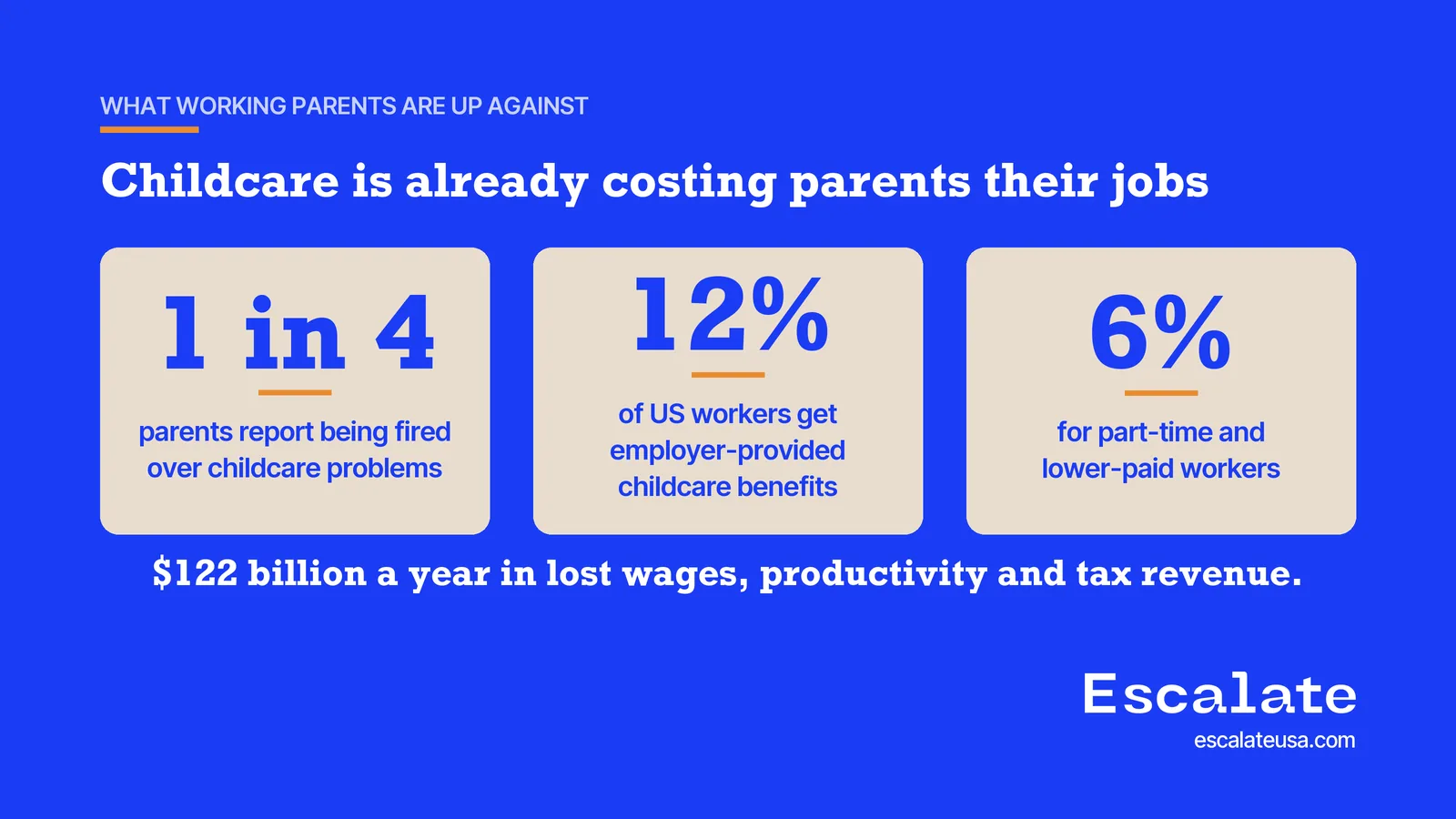
There is a real need for this kind of support. Nearly one in four parents report being fired from their jobs due to childcare problems, and only 12% of U.S. workers have access to employer-provided childcare benefits. That drops to 6% for part-time or lower-income employees. If they exist, benefits are often buried in brochures and inaccessible when they’re needed most. Growing concerns about childcare affordability are forcing working parents into impossible tradeoffs: taking on more hours to afford childcare, scrambling when it falls through unexpectedly, or missing shifts altogether. Terminations and call-outs due to childcare access issues cost $122 billion a year in lost wages, productivity and tax revenue.
Frontline schedules break the standard childcare answers
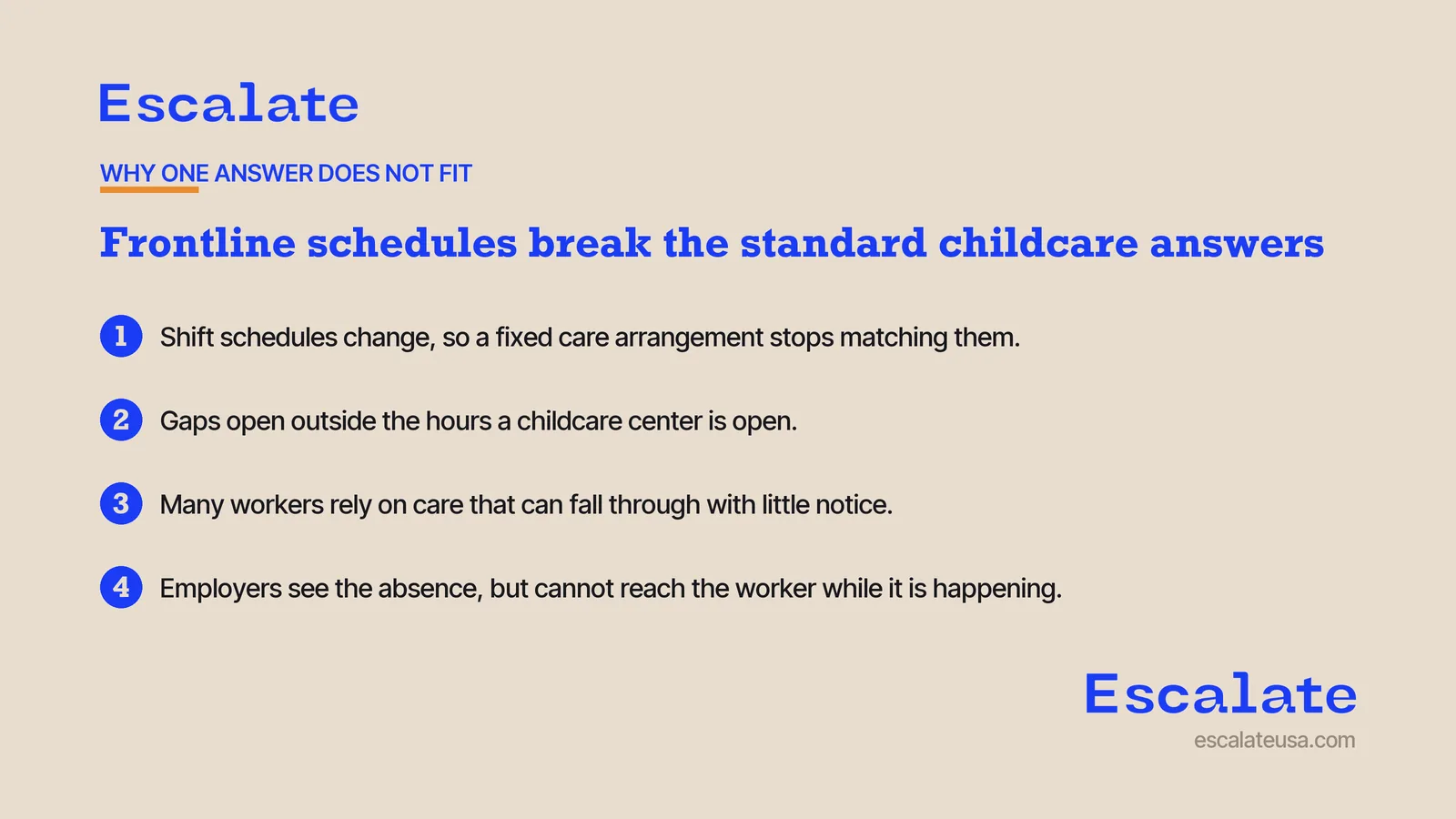
Despite the growing impact on both workers and businesses, a one-size-fits-all childcare solution doesn’t exist for frontline industries. Shift schedules change, childcare gaps happen outside traditional business hours, and many workers rely on fragmented care that can fall through with little notice. Employers may recognize the operational impact of absences, but aren’t able to intervene when those barriers happen in real time.
What support looks like for one worker
Consider how Escalate’s solution works in practice: one recent participant, a single mother of a five-month-old, has not yet been able to return to full-time work at the quick-service restaurant where she is employed. Her usual babysitter comes through most days, but when that arrangement falls through, she turns to a relative who can step in on short notice. The relative is willing, but asks for payment. Escalate covers a gift card the employee can use to pay her backup babysitter, and a last-minute scheduling problem doesn’t become a call-out for the restaurant or a missed paycheck for the new mother.
What it looked like across seven restaurants
The impact of these kinds of interventions scales quickly. In the first month of Escalate’s pilot with a seven-location fast food franchise group, restaurants prevented enough call-outs to contribute more than $35,000 in avoided operational costs across the franchise. Preventing a call-out costs a fraction of the roughly $350 an uncovered shift costs the restaurant. This kind of support may seem minor, but it can determine whether a worker makes it to a shift at all. By helping employees navigate childcare disruptions, transportation breakdowns and other last-minute barriers before a shift, Escalate gives employers a practical way to improve workforce reliability without adding operational complexity.
Childcare is an operating problem, not a personal one
For businesses, every call-out, resignation or termination due to childcare challenges has consequences on the bottom line. The viral 12-hour solo shift wasn’t just about understaffing, it revealed what happens when workers don’t have the support systems needed to stay on the job. The childcare crisis is often framed as a personal issue, but its consequences ripple across workplaces and industries. When employers have practical ways to support workers during moments of instability, everyone benefits.
If last-minute call-outs are creating operational strain for your business, Escalate can help.