Originally published on LinkedIn, May 12, 2026
Before sunrise on a Saturday morning, a McDonald’s crew member is leaving his apartment on foot for an extra shift he picked up. The bus that normally gets him to his 6:00 AM shift doesn’t run on weekends in his neighborhood, and without a driver’s license, he has to walk two hours to arrive on time. A few miles away, his general manager is already fielding phone calls from crew members who can’t make it in. Soon, the drive-thru line is wrapped around the building and the business has lost $250 in sales while the general manager spends their shift on the phone.
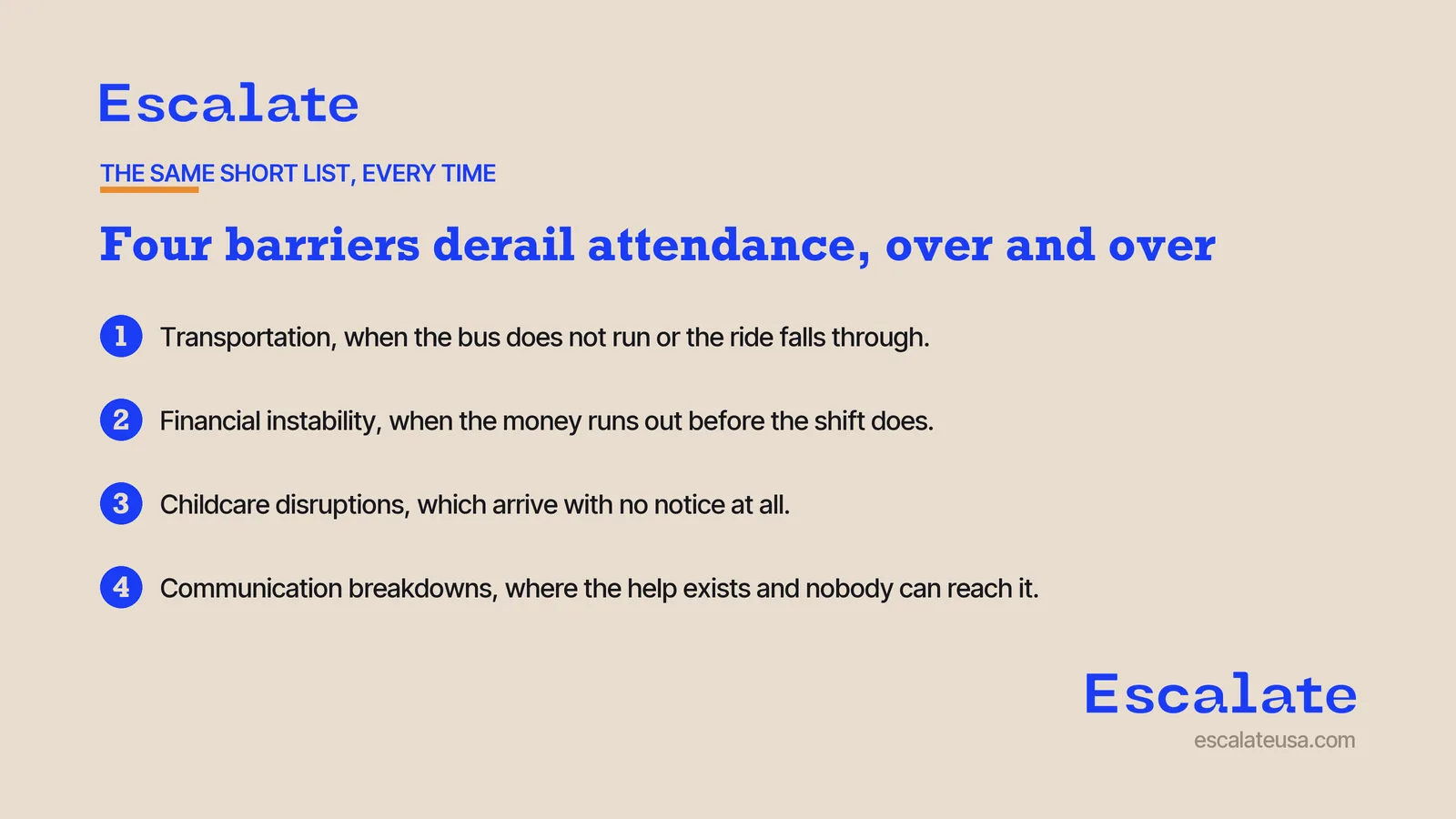
The same four barriers derail attendance
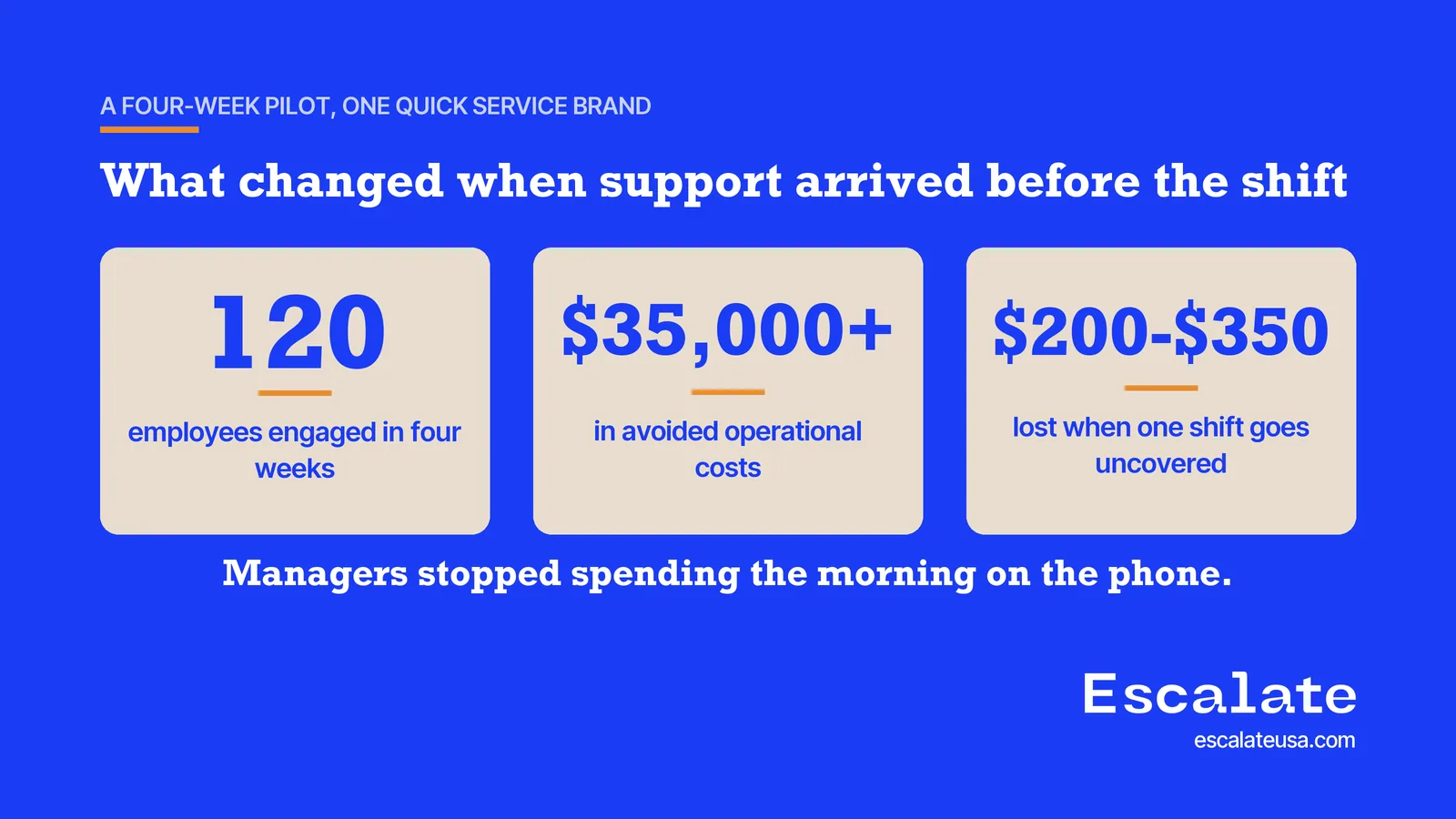
For most quick service restaurant operators, this is not an unusual start to the day. Research on worker absenteeism, including Harvard’s Shift Project, continues to point to the same short list of barriers that derail attendance: transportation, financial instability, childcare disruptions and communication breakdowns. A call-out because of one of these challenges can cost $200 to $350 in lost sales, lead to abandoned customers and increase reputational risk. When these same barriers go unresolved over time, they result in burnout, disengagement and turnover. Six months from now, the same crew member who walked to work may not even be on the schedule, not because he lacked commitment, but because he didn’t receive the support he needed.
The systems are built for onboarding and exits, not this morning
For most operators, these moments are managed one at a time, but there is a clear pattern. Traditional workforce systems aren’t built to respond in real time, focusing instead on onboarding, retention programs and exit surveys. In many cases, employers have resources available, workers just can’t access them when they need them. More broadly, retention, attendance and support are often treated as separate challenges managed by different departments. In reality they’re connected symptoms of the same blind spot in how frontline work is supported, one where small life barriers compound into major operational costs.
Support that arrives before the shift
Escalate intervenes in real time to solve immediate challenges before they become call-outs, turnover, lost sales and avoidable business disruption. It’s the only platform using spendable support and on-demand coaching, deploying the right fix to prevent a call-out, like an Uber ride that costs a fraction of potential lost sales, and showing up when a worker needs it the most.
What a four-week pilot changed
We’re already seeing encouraging proof points of this approach in our own data. In a recent four-week pilot with the world’s largest quick service restaurant brand, an always-on support platform engaged 120 employees and prevented call-outs across every site, delivering $35,000+ in avoided operational costs, all while freeing managers from last-minute crisis calls or scrambling to cover shifts. Escalate helps employers turn losses into fast, tactical interventions that may cost as little as a ride home or backup childcare. The greatest impact comes from addressing the full system, from hiring to helping workers navigate the everyday barriers that lead to call-outs and early resignations.
Behind a call-out is a worker who would have shown up
The call-out is the most visible and pressing symptom of frontline workforce instability, but it’s not the whole story. Behind a call-out is a worker who, in most cases, would have shown up if someone had intervened earlier. We build our platform around a simple insight: the right moment to support a frontline worker isn’t during an annual human resources meeting or an exit interview, but in the hours before a shift.
What the same morning looks like with support in it
With the right system in place, a crew member’s two-hour walk becomes a 15-minute Uber ride, helping them arrive on time and ready for their shift. The manager’s morning of call-outs becomes productive time spent on the floor. A timely phone call or a practical resource can change the outcome of an entire day, and over time, it can shape the entire workforce, too. It’s time for the system behind the call-out to get the same investment and attention as every other part of the operation.
Are you facing these issues across your restaurants? Escalate can help solve retention, support and attendance challenges.